
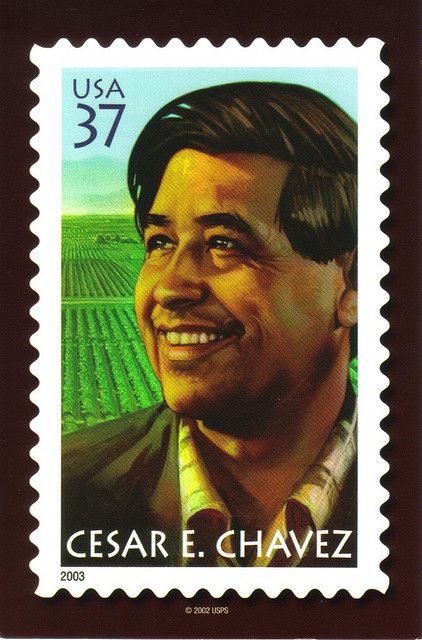
Condemnation of Caesar Chavez (1927 – 1993) has been swift and universal following the news this week that he sexually abused girls and young women during the 1960’s and 1970’s. States, organizations, and political leaders are participating in the backlash by removing (or calling for the removal of) his name from places and events that publicly honor him. His family has issued a statement that wishes for peace and healing for the survivors. The one thing no one can do though is to cover up, rename, or paper over the fact that Chavez was publicly honored on a USPS stamp (see screen capture).
The Mud Bay blog does not condone what Chavez did or urge that people be open-minded about the accusations, which were revealed in a New York Times investigation and are widespread. No girl or woman should have to endure sexual abuse or harassment, and men who engage in this behavior should be condemned.
But does that mean that the life work of an iconic labor leader and civil rights activist like Chavez is equally tarnished? Can we call him a fallen hero and remove most of the ways we have honored him, but also continue to praise what he did to raise the living standards, dignity, and working conditions for tens of thousands of farm workers?
The Chavez stamp was issued in 1993. Designed by Carl T. Herrman and illustrated by Robert Rodriguez, with a face value of 37 cents, it shows a youthful and charismatic leader with some agricultural fields in the background. The accompanying USPS write up more than justified why Chavez deserved to be honored on a stamp, citing a life that was dedicated to serving others as an advocate for nonviolent social change. As one example, Chavez co-founded the United Farm Workers of America Union. As another, he was posthumously awarded our nation’s highest non-military honor — the Medal of Freedom — by President Clinton in 1994.
You can still buy unused copies of the Chavez stamp — both on Ebay and from other online vendors. For stamp collectors, there’s a place reserved for it in stamp albums. That’s not going away. You can’t say now that it wasn’t issued or that Chavez didn’t deserve the honor then of being on a stamp.
Hundreds of great Americans have been honored on commemorative stamps. Presidents are shoe-ins, but when other people gain the imprimatur of the USPS, that’s a signal to take notice of them and to possibly go out of your way to learn about their lives and accomplishments. Caesar Chavez was such an American.
Fortunately, the USPS almost never gets it wrong when to comes to honoring people and later having opinions about them change, as far as stamp viability goes, as posthumous information enters the public realm. Until Chavez, the best example was J. Edgar Hoover (stamp issued in 1993), who was shown to have abused his power as the long-time FBI director while using illegal means to target his enemies. If you want to include slaveholders who are on stamps (for example, Thomas Jefferson and Robert E. Lee), that would add a few more people to the list. As for Richard Nixon, I think he was too important historically not to be on a stamp, even if he was the only president to resign his office.
 Mud Bay Blog