
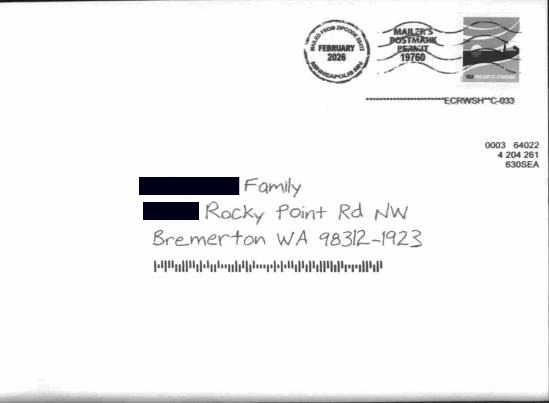
You can tell I’m bored when I’m writing about whether to open a piece of junk mail (see screen capture) that arrived a week ago. The USPS uses a more professional term — marketing mail — and that’s likely what it is. But are there enough outward clues to decide whether it is worth opening?
My brother has a simple rule for deciding whether to open unsolicited mail: if you aren’t already expecting it, toss it. To that I would add, unless the return address is from a familiar sender who could be sending you something you want. The odds of anything else being useful are so long that the mail can go straight to the recycle bin without a second thought. I normally tear unopened mail in half first just in case it somehow escapes the recycling process and boards a USPS truck for a second try.
Although this piece of mail arrived on February 14th, I doubt that it’s a valentine. Inclusion of the word “Family” in the delivery address, while incorrect unless you count the Mud Cat, makes it seem a tad more friendly. There’s no return address. To the cynical, both addressing choices, and the use of a typeface that looks handwritten, were made deliberately to raise my level of curiosity. So far it isn’t high enough for me to break out my letter opener.
Onto the information provided by the mailing process. The letter was mailed from a zip code in Minneapolis in February (perhaps it’s from ICE?). The sender used a USA Presorted Standard stamp, which means they spent about $0.50 on postage. The Mailer’s Postmark Permit number is provided. However, it can’t be used to identify the sender as only the USPS can look up the permit holder. The other number and letter codes probably help tell the story of the letter’s journey to Bremerton but aren’t clues as to its importance. The bar code below the address line indicates it was bulk mailed, something we already know from the stamp.
The envelope’s size (~7 x 5 inches) and lack of a window suggest that it’s from a charity, school, small nonprofit, or other similar organization. Use of a plain white #10 envelope instead often indicates a bill, notice, or larger mass mailing. The envelope is opaque so I can’t clearly make out any of the contents, but there appears to be a couple of sheets of folded paper inside. If there’s also a small return envelope, it isn’t visible.
That’s about it. Should I follow my brother’s rule or let my curiosity take over? Either choice seems valid.
 Mud Bay Blog