
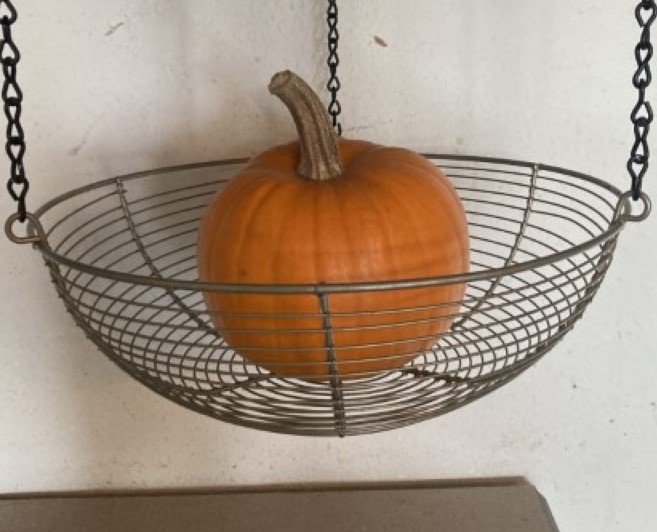
Last summer the pumpkin in the photo was planted and grown in a sunny fenced garden on Treasure Island. Compared to its vine mates, it was the runt of the litter. After being harvested in early October, the pumpkin had a short career as a front-door Halloween decoration. Then it moved inside. Who knew it would last this long?
Although more than three months have gone by since it left the garden, the pumpkin, which I have named Pluto, is remarkably solid and free of decay and rot. That’s not a record, but it’s nearing the upper limits of a pumpkin’s lifespan. Several mostly unintended actions have contributed to Pluto’s long life.
Despite its diminutive size, the pumpkin was fully grown and ripe when picked. Leaving a few inches of stem attached also helped. It was never bruised, avoiding the rough handling suffered by many pumpkins that are grown for sale at grocery stores during the fall. And Pluto was too small to be considered for jack-o’-lantern duty. (Carved pumpkins last about a week before rotting.)
The biggest reason for its longevity was moving Pluto into the garage not long after Halloween, out of direct sunlight and rain. The garage isn’t heated, but ambient heat from the house keeps it between 50 and 60 degrees this time of year. Apparently, along with low humidity, that’s an ideal climate for pumpkin storage.
I mention these factors not because they were planned but to try to explain why the pumpkin still looks and feels like it was harvested last week. OK, it’s not going to make it to Halloween 2026, but Pluto could still be around for Valentine’s Day. Perhaps I should paint a heart on it.
 Mud Bay Blog